By Andre Roupp
•
September 7, 2026
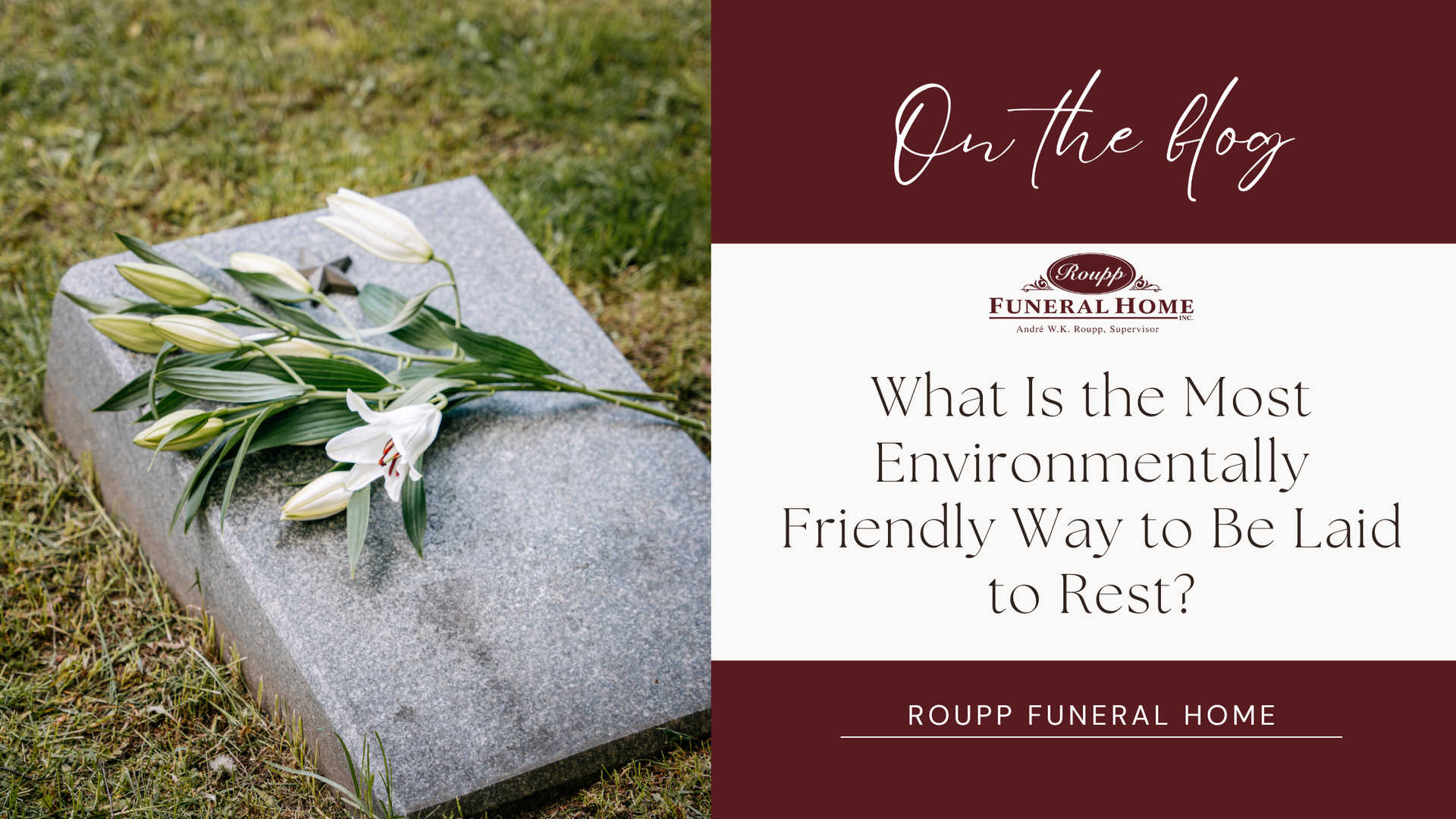
When people think about planning a funeral, environmental impact may not be the first thing that comes to mind. But for many families, living in a way that is mindful of the environment is important and they want their final arrangements to reflect those same values. We hear questions like: Is cremation more environmentally friendly than burial? What exactly is a green burial? Is there such a thing as an eco-friendly funeral? Are there newer options that are better for the environment? The honest answer is that there isn't one simple answer. When we talk about environmentally friendly funerals, there are many factors to consider. The type of disposition is one of them, but so are embalming, the materials used, transportation, the cemetery, the container or casket, and even how a family chooses to gather and memorialize their loved one. At Roupp Funeral Home, we believe families deserve straightforward information so they can make the choice that feels right for them. Let's take a closer look at some of the options. What Makes a Funeral Environmentally Friendly? Before comparing burial and cremation, it helps to define what we mean by "environmentally friendly." A green or environmentally conscious funeral generally focuses on reducing the use of natural resources, minimizing waste, avoiding unnecessary chemicals and choosing materials and practices that have a smaller environmental impact. That can mean something different to every family. For one person, an environmentally friendly funeral might mean a natural burial in a conservation cemetery. For another, it might mean cremation and choosing an urn made from biodegradable materials. Someone else may simply want to reduce the amount of unnecessary materials used during the funeral. There are many shades of green. The National Funeral Directors Association notes that green funerals can incorporate a range of choices, including alternatives to traditional embalming, biodegradable burial containers, sustainable products, local flowers, natural burial and other environmentally conscious practices. In other words, you don't have to choose one specific type of funeral to make environmentally conscious decisions. Green Burial: A Natural Return to the Earth When most people hear the phrase "green burial," they picture someone being returned directly to the earth in a natural setting. That's essentially the idea. A traditional green or natural burial generally avoids embalming and uses a biodegradable casket, shroud or other natural container. The body is placed directly into the earth without the concrete burial vaults commonly used in conventional cemeteries. The goal is to allow the body to decompose naturally and return to the earth. Some green burial grounds also use natural landscaping practices and minimize traditional lawn maintenance. Instead of a large conventional headstone, families may choose a simple natural marker, such as a flat stone, or in some settings, a tree or plant may serve as a memorial. Green burial can be an especially meaningful choice for someone who feels a strong connection to nature. It can also provide a very tangible sense of returning to the earth. Is green burial the most environmentally friendly option? It can be one of the most environmentally conscious choices available, but even green burial isn't completely without environmental impact. The environmental footprint depends on the specific cemetery, transportation, materials used and practices involved. A natural burial that avoids embalming, concrete vaults and non-biodegradable materials will generally have a very different environmental impact than a conventional burial involving embalming, a metal casket and a concrete vault. That's why it's important to look at the whole picture , rather than simply labeling one option "green" and another "not green." What About Cremation? Cremation has become a very common choice for families, and it is sometimes described as a more environmentally friendly alternative to traditional burial. There are some reasons for that. Cremation does not require a permanent burial plot, which can reduce the amount of land needed for disposition. Families can also choose simple, biodegradable or reusable memorial products, and cremated remains do not necessarily need to be buried in a cemetery. However, cremation also requires energy and produces emissions. The cremation chamber operates at very high temperatures and generally relies on fossil fuels. Because of this, the NFDA does not consider conventional flame cremation to be a "green" disposition method, although it may use fewer physical resources and less land than some forms of conventional burial. So is cremation environmentally friendly? It can be a lower-resource option in some respects, but it isn't impact-free. That's an important distinction. What Is Water Cremation? You may have also heard about alkaline hydrolysis , sometimes called water cremation or aquamation. Instead of using a flame, alkaline hydrolysis uses water, an alkaline solution, heat and pressure to accelerate the natural breakdown of the body. The remaining bone material is processed into a powder similar to cremated remains. One of the reasons this method receives attention from environmentally conscious consumers is that it uses less energy and produces fewer greenhouse gas emissions than flame-based cremation. It is important to note, however, that availability and legality vary by state. Because these newer disposition methods are still developing, families should talk with a funeral professional about what is legally available in their area and what providers are actually offering. What About Human Composting? Another emerging option is Natural Organic Reduction (NOR) , commonly referred to as human composting. The basic concept is exactly what it sounds like: the body is placed in a controlled environment with organic materials, such as wood chips and straw, where natural microbial activity breaks down the remains and ultimately produces soil. The process generally takes several weeks. Human composting is gaining attention from people who want their final disposition to have a direct connection to the natural environment. According to the NFDA, NOR is currently legal in a limited number of states, with laws continuing to evolve. As with water cremation, availability is an important consideration. Just because a disposition method exists does not mean it is available everywhere. What About Embalming? Embalming is another factor families sometimes consider when thinking about environmental impact. Traditional embalming uses preservation chemicals, including formaldehyde-based fluids. Green burial practices generally avoid embalming and instead use refrigeration or other appropriate methods for temporary preservation when needed. It's also worth remembering that embalming is not automatically required for every funeral or burial. Whether embalming makes sense depends on the family's plans, whether there will be a public viewing, timing and other circumstances. This is one area where talking with a funeral director can be particularly helpful. We can explain what is necessary, what is optional and what alternatives may be available. So Which Option Is the Most Environmentally Friendly? This is where the answer gets a little more complicated. There isn't a single disposition method that can automatically be called the most environmentally friendly in every situation. That's because environmental impact isn't determined by one factor. Consider everything involved: How much energy does the process require? Does the process produce emissions? Are embalming chemicals used? What materials are used for the casket, container or urn? Does the burial require a concrete vault? How much land is required? How far does the body or cremated remains need to be transported? What kind of cemetery or burial ground is being used? What happens to the property over time? Are products biodegradable, recyclable or reusable? Once you start looking at all of those factors together, the answer becomes much more nuanced. For example, a conventional burial and a natural burial may both be classified simply as "burial," but their environmental footprints can be quite different. Likewise, two cremations can have different overall impacts depending on the products chosen, transportation involved and what the family ultimately does with the cremated remains. An Environmentally Conscious Funeral Doesn't Have to Be All or Nothing This is something we think is particularly important for families to understand. You don't have to choose between a completely traditional funeral and an entirely "green" funeral. There are many small decisions families can make. For example, you might choose: A biodegradable urn. If cremation is the right choice for your family, there are urns made from natural and biodegradable materials. Fewer materials. A simpler service can mean fewer products and resources are required. Natural flowers. Choosing locally grown flowers or reducing the amount of floral material can be another consideration. A natural burial. If your cemetery offers a green burial option, you may be able to avoid embalming, traditional caskets and burial vaults. A meaningful gathering without excess. A funeral or memorial service doesn't have to be elaborate to be meaningful. Sometimes the simplest gatherings are the ones families remember most. Thoughtful transportation. Transportation is another part of the overall environmental picture that is easy to overlook. There is no requirement that an environmentally conscious funeral look a certain way. How Roupp Funeral Home Can Help If you're considering an environmentally friendly funeral or simply want to understand your options, you don't have to figure everything out on your own. At Roupp Funeral Home, we're here to answer your questions without judgment and without telling you that there is one "right" way to say goodbye. We can help you understand the different options available, what is required, what is optional and what choices may allow you to reduce the environmental impact of the arrangements. Sometimes the best place to start is simply with a conversation. If environmental responsibility is important to you or your family, let us know. We'd be happy to talk through the possibilities with you. After all, planning a funeral isn't just about deciding what happens at the end of someone's life. It's about finding a way to honor who they were, what they valued and what they leave behind. And for some people, leaving the world a little greener is part of that legacy.